Learning and Assessment Resonance
 |
| From Google Image Search |
Effective teachers begin each year learning more than their students. The first two or three weeks of any junior high class must start with students learning how to be students, specifically students must learn the protocols of the classroom and the school, and the teachers must also be learning about students grade level or level of understanding and ability. Formal assessments given in the first two weeks of September, or whenever a new student arrives in the classroom, are foundationally crucial for learning to resonate at the individuals level throughout the year. By Formal Assessment I mean diagnostic exams that give the educator an idea of where each individual student is functionally able to operate. The Canadian Tests for Basic Skills (reading comprehension) and the Canadian Achievement Test 3rd Edition (for Math) are a good starting point to have a diagnostic idea of a student’s skills and abilities, but that is still part of the model of dissonance. The model of resonance would be a live face to face assessment of the skills, abilities and understanding of each individual student. Over the first two or three weeks every student needs to be given several opportunities to reveal to the teacher what they are capable of and how much they know. Classes should be designed around the idea of the teachers learning from the students. This would happen through analysis of texts (meant in the inclusive sense of the word, and not the book sense), discussion of ideas, statements that express former learning, problem solving ability, and many other informal assessments.
Teachers and students are often taught to believe that there are different kinds of assessments and that is simply not true. All assessment is an attempt to understand (teacher) and express (student) what has been learned. When educators and administrators discuss assessment of vs. assessment for, or if they want to debate the merits of summative vs. formative assessment, then they need to change the title of the discussion to a conversation about reporting practices. The common metaphor around the idea of assessment is that the formative “as” learning assessment is practice for the big game, the summative assessment often called assessment “of” learning. These terms are grossly misleading. To stay with the metaphor of a sports game, do I not learn of an athlete’s ability in both the game and the practice? Can I understand the learning of a student in both a written exam and a class discussion? Educators and schools should be careful that their conversations on assessment are not simply conversations about reporting.
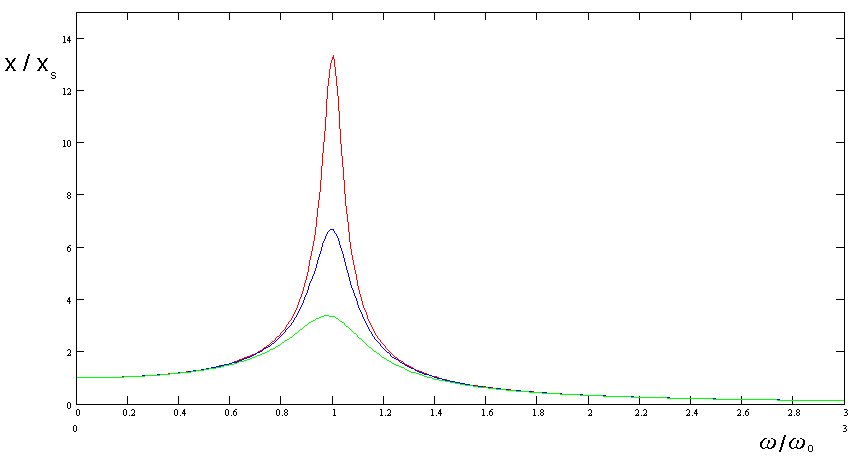 |
| Resonance in Physics occurs when a system is able to store and easily transfer energy between two or more different storage modes. |

Leadership in assessment is directly linked to enabling classrooms to achieve the most effective level of learning/assessment resonance between students and teachers. This is achieved by two important avenues. One, the school leaders must set the direction and help guide all staff to common reporting practices. How learning is communicated from the teachers to the students, parents and other stakeholders requires a whole school approach. The teachers themselves need to be involved in this process, but school leaders, based on an advanced understanding of effective reporting practices, must set a firm and achievable framework that all teachers follow. Secondly, school leaders must provide teachers with an appropriate amount of autonomy, thus enabling them to work within their own talents and abilities to create the learning and assessment resonance in their own classroom everyday. School leadership will then help monitor and assist teachers in achieving real and authentic engagement, learning and assessment.
The language is often misleading, but a clear understanding of what engagement, learning, assessment and reporting means is essential for any school. Communication across all involved parties cannot take place unless leadership is very clear on what each term means, and how these very distinct, but intricately related, ideas come to fruition in a school. To speak in more pragmatic terms, the assessment leaders in a school ought to hold up the ideal that every student needs to be engaged and learning, and they need to ensure staff know how to most effectively organize their gradebooks in order to share a school-wide and common reporting practice. With those two concepts firmly in place school leaders can then facilitate meaningful discussions in the school about how assessment is proceeding in individual classrooms and with individual students.


This written application to Edmonton Public Schools was returned to me with comments that I write without voice, and that I do not understand the nature of assessment. I have allowed this criticism to sink in, and I have reflected on the merits of the critique. Now that I am further removed from my initial emotional response it is clear to me that these particular evaluators have their heads firmly stuck up their butts, 'cuz brother that shit up there is real and it is all about learning, and if you can't read that then we aren't even in the same business. peace
ReplyDelete