Tuesday, 2 October 2012

Motivation in the Classroom

Motivating students should be our very first job in our classrooms. Students need to know why they should care and why they should learn. If schools are functioning properly then Div 1 + Div 2 (grades 1-6) should utilize the pre-built motivation that students bring with them to ensure that students gain the basic literacies needed to survive the more rigourous studies that will be asked of them. In Div. 4 (grades 10-12) the studies get serious (a little too serious in my opinion, but that is for another post) and students must be motivated to succeed and start to refine the work habits and abilities that they have built through the years.

So where does that leave us in Div. 3? Middle School, Junior High, Grades 7-9?

We have the task of motivating students. We have to fight the growing teenage mind and convince it that Algebra is more important than One Direction

This is what we are competing against. Yes it is daunting.
We have to prove that understanding metaphors is more valuable than the gossip about friends and enemies. How many 12 and 13 year olds actually believe that history includes them and should matter to them? I will tell you, not that many. That is what must be taught.

Everyday Message to students: "This stuff matters, kids. This stuff is important to YOU right now."

If all that is accomplished in a students entire Div. 3 experience is that students begin to love learning and students start to care about the world of information, knowledge and skills around them then the job of us middle-school teachers is almost complete.

It is also a crucial time in teaching young humans how to be good and decent human beings, but that is also another blog post.

Motivation is so entirely crucial, relevance is never more important than it is at this age and time and place. Please teachers, make sure your students are motivated and interested. So many students are so intensely bored by their entire day at school, and yes that is the responsibility of teachers.

I'm sorry if this offends, but look at what you are competing against.

Try to get my attention when I have this waiting at home.
We are in a cultural battle to make learning important and meaningful to these youngsters. Take the time to make them care, because if you don't show them and reveal to them why it matters they will not figure it out on their own.

Thursday, 27 September 2012

Now That We Know, What Do We Do?

There's this school that I heard of. One September they ran some tests to find out where the students sit in their Mathematical skills and abilities and their reading comprehension abilities. This school was able to pull results for entire grade levels and for individual classrooms.

This hypothetical school had some revealing and important results.

I will leave the chart untitled to protect the identity of the school and the classroom, but suffice it to say that the majority of the diagnostic results for both Math and L.A. across the grades and classrooms revealed similar results.

This particular school had a majority of students within each classroom that were reading below grade level and performing mathematical skills well below grade level.

This school and it's teacher were thus left with a dilemma Now that they know the results what do they do with the students?

The answer was not as complicated as it first appeared.

The answer lay in the minds and will of the individual teachers. The answer was indeed completely liberating. The teachers in this school rejoiced at the freedom they were given to operate and experiment at this school.

The answer, for the teachers was that they could Do whatever they wanted!!!

As most people could tell from the results this was not a typical classroom, not at all.
What a school to work in? It was practically risk free and it quickly became a breeding ground for the best and most innovative educational ideas. Consider the following argument, that led to the innovation:
  1. The teachers assumed that most of these students had been taught in classrooms that were segmented into age directed grade based levels, broken up into pieces of disciplinary segments (math, social, science, L.A.) where students sat in rows or groups of students and attempted to learn what a teacher gave them to learn. 
  2. The teachers also assumed that the students in this classroom had a variety of learning barriers, gaps in their learning, a deficit in the family support system and less than perfect attendance (read: a horrible attendance problem that proved to be a major barrier).
  3. The teachers then concluded that if they were to continue to teach the students in the same method detailed in assumption #1 and there was no meaningful progress in alleviating the barriers outlined in assumption #2 that they could reasonably expect that there would be no real change in student results: a majority of students would continue to perform underneath "grade level" expectations.

Insanity: doing the same thing over and over again and expecting different results.
My Message that I take away from the school in the above story: We can do anything we want with these results.

We can innovate. We can teach individual students. We can allow our highest achievers the freedom to grow at an accelerated pace. We can slow things down and start motivating students to want to learn. We can throw out the curriculum and focus on literacy. We can meet the students where they are and raise them up. We can spend half a day bonding with students because we know that when they feel safe, then they feel safe enough to learn. We can turn the bells off or we can keep them on. We can give students play time. We can show kids why we learn math, and why it is important. We can ignore the judicial branch of government unless a kid cares about the judicial branch of government. We can stop making thirty different kids read the same damn book, unless, of course they want to learn in a community book club. We can let the kids that hate volleyball play around and wrestle instead. We can give ourselves the freedom to care a little less about structure and a little more about learning. We can stop worrying about things we can't control, like families and previous learning experiences, and chronically poor attendance, and we can start caring more about the things we can control, like helping kids see the joy in learning and helping students see the importance of growing through academic pursuits.

By avoiding the status quo it would, at least, be possible to succeed. Honestly, turning the whole school upside down seems a lot less insane then keeping things the same way.


Are you with me?

Wednesday, 12 September 2012

In Solidarity

I am in more than a little torn about the idea of unions. I appreciate the idea of a strong union for the obvious reasons, and I also acknowledge the periodic necessity of the institution, but I also appreciate and acknowledge the obvious and oft-repeated criticisms of unions. This post is not necessarily about unions, but I wanted to make clear my position as a member in good standing with the ATA, but also as an, at times, critical member. Let's be especially clear (in order to avoid these words coming back to bite me). Unions are effective, and often necessary, but they, like any institutional organization, deserve to be regarded thoughtfully and, at times, critically. I reserve the right to question the actions of my union. Have I covered my ass enough yet?
EA's are able to bond with and give so much to special needs students. 

This article isn't about unions, it's about school support staff. Most particularly this is about Educational Assistants. I'm not going to lie. I am grossly uninformed about the supposed strike that the Catholic School Board Support Staff is undertaking right now. All I know is that on Monday hundreds of support workers for Edmonton Catholic Schools walked off the job.

I also know that Edmonton Public School support workers are currently in contract negotiations. This got me to thinking. What if the same happens here at my school? I have worked closely with the EA's in my school and I do not think there is a more underpaid, overworked group of intelligent, effective and caring people in this school.

Could I cross their picket line? Not in good conscience. Could my union make me cross their picket line? Probably, but isn't that hypocritical? Do I support the women that I have worked with closely in the last two years? Wholeheartedly. If anyone deserves more recognition, more hours and higher wages it is the EA's in this school.

Even while writing I have a curious feeling. I can write honestly about any number of educational issues and I never hesitate to click publish. But talking about unions, and talking honestly about working conditions... can I publish?

__________ right I can

Wednesday, 5 September 2012

Can You Work More For Me?

Well we all survived the first day of school. I have a new position in school leadership, but I am worried about one thing in particular: Can I Ask Teachers to Do More Work?
September workload can be overwhelming.
The nature of leadership requires me to ask staff to do things. I don't have a problem asking them to do reasonable tasks, but asking them to do extra work is difficult. Teachers have the most tasking and time consuming job in the school. I can't, in good conscience, ask them to do extra work on top of their already immense workload.

So what can I do when I need the teachers to do something for me?

The answer, as I realized while running last night, is not as complex as it appears. If the time needed from a teacher to complete a task is greater than the combination of the time gained by a teacher plus student achievement and growth then I can justifiably ask a teacher for help. This can actually be expressed in a formula.

If T (needed) < T (gained) + Student Achievement then ✓

If T (needed) > T (gained) + Student Achievement then X

This is not some floofy fake formula (alliteration not intended). This will actually guide my formal interaction with staff throughout the year. Admittedly the student achievement is difficult, but not impossible, to measure.  For this to work I need to test the formula for validity. So here is my first test:

I asked and expected all of the teachers to administer an exam to students in their homeroom. This was part of the first day package and the office was able to have all of the exams printed and handed out to the teachers, so there was no work required there, but I also asked the teachers to grade and record the exams, so here I am asking them to do more work. I need to ask myself, is it justified? 


Time Needed from Teachers = 30 minutes to grade on scantron and record the marks.
Time Gained from Teachers = 10 minutes of planning time for the one hour of class to write exam
Student Achievement = Use results of exam to track student growth over the year, identify outlying high performing and struggling students on the first day of school, use this data to help teachers plan intervention strategies.

30 min. < or > 10 min. + Early Identification\Intervention Planning?

The third variable in the equation is not yet measurable, so the formula is still of the typical floofy education variety. How much time would it take for a teacher to identify and begin planning intervention strategies for the outlying high and low performing students in their classes? An experienced teacher could have this accomplished in one class period 40 - 50 minutes. They would not, however, have comparable school wide data that could be used across their teacher teams. They would, most likely, have a sample of student work and their own professional anecdotal evidence about the students. Even if I ignore the last point and use the smaller number the answer is clear. I am justified in asking teachers to grade and record the student exams.

30 min. < 10 min. + 40 min.

I am justified in asking teachers to grade and record the student exams because it will actually save the teachers some time in the long run.

It is my promise to teachers that I will not ask them to do anything that will only create more work for them. If I ask anything of teachers this year it will be under the auspices of this formula.

You can hold me to this.


Wednesday, 15 August 2012

Ideas I am Still Formulating

Here are some ideas that I originally encountered two years ago while George Siemens was writing at elearnspace. The original post, Questions I'm no Longer Asking, is thought provoking enough, but I wanted to revisit and reinterpret what they mean to me today as I enter into a new role as curriculum coordinator here at Westlawn.

1. Learners should be in control of their own learning. Autonomy is key. Educators can initiate, curate, and guide. But meaningful learning requires learner-driven activity.
I try to use a creative commons search, but I get nothing.
For now I steal and borrow from Google Image Search.
This idea runs up against how the k-12 system is structured the second students walk into the classroom. It does not have to be this way. As soon as we make all of the 8-2 kids go to Math class and learn the exact same thing at the same time and in the same way we are taking away their autonomy. Of course they will not be interested they are not the architects of their learning at all. Even if a teacher assumes the overarching structure cannot be altered, a false and damaging assumption, they should still try to increase autonomy within the classroom as their number one goal and guide.

2. Learners need to experience confusion and chaos in the learning process. Clarifying this chaos is the heart of learning.
To the teachers at Westlawn: BE THE CAT!
Confusing students and creating dissonance within the minds of students sets the groundwork for an open mind that is ready to learn. Show them the broken pieces of their understanding and allow them to piece their own world together into something that is reasonable and comprehensible. Let them create their own understanding and check their understanding against the learning of their peers. Already this probably sounds great in theory, but it goes further than being a nice idea. As soon as we act on the truth that learning is why our classrooms exist then we can put aside the factory structure that prepares students to write a grade nine multiple choice exam.

3. Openness of content and interaction increases the prospect of the random connections that drive innovation.


Open it up, or think differently about what it means.

It is difficult to find an idea that is more opposed to current school culture than openness of content. Students need to know what they are learning, why they are learning it and they have the right to question it's relevance. Part of the reason why we have students closed off from the original content of what they are learning is because we, as teachers, don't always agree. If this post is starting to sound like it is against standardized curriculum that's maybe because it is. I didn't intend for it to be. I am testing my own ideas against those of George Siemens. What do you think? Comment below. 

I will let these last four ideas stand alone without comment. It is still summer after all. 


4. Learning requires time, depth of focus, critical thinking, and reflection. Ingesting new information requires time for digestion. Too many people digitally gorge without digestion time.

5. Learning is network formation. Knowledge is distributed.


6. Creation is vital. Learners have to create artifacts to share with others and to aid in re-centering exploration beyond the artifacts the educator has provided.


7. Making sense of complexity requires social and technological systems. We do the former better than the latter.


Thursday, 28 June 2012

Within the Graduation - Reflection


Learning and Assessment Resonance

From Google Image Search
Learning does not take place in the school, or even in the classroom. Learning takes place in the mind of an individual. Assessment is the extent to which one can have insight into the nature of that learning. It is the interplay of a student’s mind and an educator’s awareness of that mind’s learning. Often the two ideas of assessment and learning are presented as concepts that are in perpetual dissonance. This can be seen in a majority of contemporary classroom situations where learning takes place at one point in time, and that learning is followed by assessment at another distinct point in time. This model of dissonance is profoundly incorrect. Learning and assessment, rather, need to have resonance. Learning and assessment are shared insights between two learners. One learner has the title of teacher and one learner has the title of student, but both are continually involved in striving towards insight and learning. 


Effective teachers begin each year learning more than their students. The first two or three weeks of any junior high class must start with students learning how to be students, specifically students must learn the protocols of the classroom and the school, and the teachers must also be learning about students grade level or level of understanding and ability. Formal assessments given in the first two weeks of September, or whenever a new student arrives in the classroom, are foundationally crucial for learning to resonate at the individuals level throughout the year. By Formal Assessment I mean diagnostic exams that give the educator an idea of where each individual student is functionally able to operate. The Canadian Tests for Basic Skills (reading comprehension) and the Canadian Achievement Test 3rd Edition (for Math) are a good starting point to have a diagnostic idea of a student’s skills and abilities, but that is still part of the model of dissonance. The model of resonance would be a live face to face assessment of the skills, abilities and understanding of each individual student. Over the first two or three weeks every student needs to be given several opportunities to reveal to the teacher what they are capable of and how much they know. Classes should be designed around the idea of the teachers learning from the students. This would happen through analysis of texts (meant in the inclusive sense of the word, and not the book sense), discussion of ideas, statements that express former learning, problem solving ability, and many other informal assessments.

Teachers and students are often taught to believe that there are different kinds of assessments and that is simply not true. All assessment is an attempt to understand (teacher) and express (student) what has been learned. When educators and administrators discuss assessment of vs. assessment for, or if they want to debate the merits of summative vs. formative assessment, then they need to change the title of the discussion to a conversation about reporting practices. The common metaphor around the idea of assessment is that the formative “as” learning assessment is practice for the big game, the summative assessment often called assessment “of” learning. These terms are grossly misleading. To stay with the metaphor of a sports game, do I not learn of an athlete’s ability in both the game and the practice? Can I understand the learning of a student in both a written exam and a class discussion? Educators and schools should be careful that their conversations on assessment are not simply conversations about reporting. 


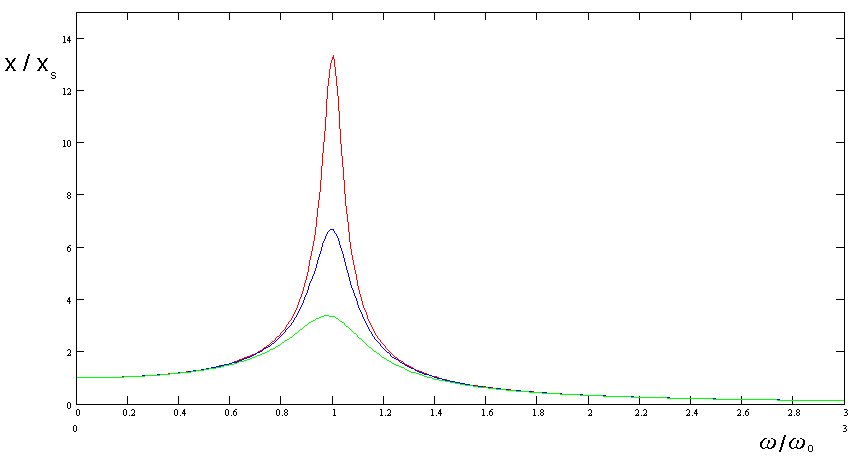
Resonance in Physics occurs when a system is able to store and
easily transfer
 energy between two or more different storage modes.
Assessment is an exchange between student and teacher about learning. This resonance is apparent, easy to identify, the most accurate and the most effectively utilized when student engagement is high. There is direct proportionality between how engaged a student is in their learning and how much a teacher can learn about that students mind. When student engagement is high they ask better questions, thus revealing exactly where their understanding sits and opening the floor for further exploration and expansion of learning. When students are engaged they learn from each other, thus a keen observer can accurately identify where multiple minds sit in a short amount of time. Students fully engaged in their writing learn more about how to express themselves. Students who are engaged in what they are reading end up looking up words they do not know. There is a fundamental resonance between students, learning, teaching and assessment. I was told once that students need to know their targets in order to be properly assessed, but how is it possible to know a target when the goal is individual growth and learning? The two ideas of assessment and reporting need to be separated, and the focus needs to be on increasing learning through engagement and meaningful assessment. Assessment means knowledge of an individual’s learning and understanding.

Leadership in assessment is directly linked to enabling classrooms to achieve the most effective level of learning/assessment resonance between students and teachers. This is achieved by two important avenues. One, the school leaders must set the direction and help guide all staff to common reporting practices. How learning is communicated from the teachers to the students, parents and other stakeholders requires a whole school approach. The teachers themselves need to be involved in this process, but school leaders, based on an advanced understanding of effective reporting practices, must set a firm and achievable framework that all teachers follow. Secondly, school leaders must provide teachers with an appropriate amount of autonomy, thus enabling them to work within their own talents and abilities to create the learning and assessment resonance in their own classroom everyday. School leadership will then help monitor and assist teachers in achieving real and authentic engagement, learning and assessment.

The language is often misleading, but a clear understanding of what engagement, learning, assessment and reporting means is essential for any school. Communication across all involved parties cannot take place unless leadership is very clear on what each term means, and how these very distinct, but intricately related, ideas come to fruition in a school. To speak in more pragmatic terms, the assessment leaders in a school ought to hold up the ideal that every student needs to be engaged and learning, and they need to ensure staff know how to most effectively organize their gradebooks in order to share a school-wide and common reporting practice. With those two concepts firmly in place school leaders can then facilitate meaningful discussions in the school about how assessment is proceeding in individual classrooms and with individual students.

Monday, 13 February 2012

Assessment or Engagement? To tech. or not to Tech? and Other Pedagogical Questions.

While on twitter the other day, an increasingly rare occurence, I came across this post from a fellow educator in B.C. @NeilStephenson:

great deal of good could be done by shifting our attention from measuring achievement to stimulating engagement" 

I followed up and read the link that Neil had posted. It offered some remarkably challenging ideas that can be encapsulated in this one sentence, "it is achieving engagement that should be our primary concern when thinking about everything from a lesson plan to the structure of a school system." This idea runs counter to many of the practices within my school, and I believe, my school system. The idea makes a great deal of sense, but I have recently been so focused on assessment and evaluation of results that I have not been as focused on engagement as I should have been.


At the same time as this challenging idea is blossoming in my mind I come across a post from an ed. tech. guru named Michael Wesch. If you have not yet heard of Michael Wesch you are a little bit out of the loop in the ed. tech world, so let me catch you up. Michael Wesch was catapulted into pedagogical consciousness with the creation of his video with students called Web 2.0 the Machine is Us/ng us, embedded below:


This short video is certainly worth watching and discussing, but when one digs further into Wesch's work it is easy to identify and experience the fundamental shift that the information revolution is causing in how we understand the world and how we learn about anything.

The video below contains a fantastic one hour explanation of Michael Wesch's ideas and the how and why it is impacting pedagogy. Seriously, take an hour and watch the video below,


What is relevant to this blog post now is that Michael Wesch is questioning some of his core ideas about teaching. On February 12th he published a blog post titled A Tech-Happy Professor Reboots written by Jeffrey Young where he questions the fundamentals of his teaching and experience. It is also worth reading and considering.

The common thread throughout both of these questions is that nothing is, nor should it be, closed to discussion. The learning occurs, the professional development occurs, when the ideas collide and try to understand each other. I think this might have something to do with a thesis, antithesis and sythesis, but I never understood actual philosophy so whatever.

What I understand goes like this:

  1. Admin and ed. culture in Alberta tells me that effective assessment is critical to learning. I consume and internalize this idea. My practice develops around the process of creating meaningful assessment in my teaching team.
  2. I read a new idea on twitter that challenges my thinking about this issue. I start to question if my approach is backwards. Should I be worried about engagement first and assessment last. I experience a feeling of conflict about the importance of assessment.
  3. I discuss this idea with a colleague in my team meeting and we collectively decide that engagement is the most important aspect of learning, but that we can have a more organized, focused and reproduce-able approach to engagement if we have solid agreed upon assessments already in place. 
  4. My understanding of engagement and assessment is re-defined, and I am now a better and more informed teacher.
Whatever this means it is essential in professional development.

The main idea is that every educator should periodically question their assumptions and even the foundation of their pedagogical beliefs. Michael Wesch is questioning his use of technology in the classroom, and we should question the forces that drive our own individual practice. For our efforts we will become better teachers.


Tuesday, 24 January 2012

Parents Should Use Schoolzone.

THIS POST IS WRITTEN FOR A PARENT COUNCIL MEETING WHERE I AM OFFERING HELP AND ADVICE ON THE USES OF SCHOOLZONE.

First of all a caveat. I am not a parent! I have no real experience at being a parent. I do not know what it is like to balance a personal life, my career and children. Having said that here is what I think about parenting.

First of all, it looks damned difficult. I mean I have trouble "parenting" or teaching students in 50 minute intervals. I can hardly imagine the 24/7 demand on being a parent. My wife and I, right now, are pretty happy. We traveled to New York City with nothing to worry about, we enjoy road trips because they are calm and quiet, and we get to out for dinner or drinks as often as we feel and can afford. Which is why I find hearing about a potential loss of happiness that comes with being a parent particularly disconcerting. I mean look at this graph that shows up at 12:00.


The ted talk above and the chart that they include tells us that it is okay to admit that parents are often less than happy than non-parents.

Much worse, if you have a student that is just becoming a teenager you should expect to be extremely unhappy for the next few years. I don't personally put a whole lot of weight in these findings, but the idea that parenting is difficult comes across very clearly. Further, the parenting of teens is particularly nerve racking and difficult.

This is why many parents mistakenly use the early teen years (middle school and jr. high) to become less involved in their children's lives. Teens are also using this time to encourage their parents to become less involved in their lives. This quip from an article on how to Stay Involved in Middle and High School puts it nicely,

It's not unusual for middle- and high-school students to discourage their parents from coming to school, but parent involvement is important to your teenager's academic success. Studies show that parent involvement is linked to achievement in the upper grades, just as it is in elementary school.


That is what we are in fact talking about today. Parents are needed to help students be academically successful. Students in middle school are continually pressured to lose their interest in academics. Middle school, apart from public opinion is the time to make sure students continue their academic success, not the time to assign to it less importance.

Successful students and parents know this........... Enter Schoolzone.


Schoolzone is there to make it easier for parents to be involved in their students academic lives. Here are some Westlawn School usage statistics.

  • Schoolzone is currently used by 100% of the staff for reporting on marks, attendance and lates.
    • Fresh Marks are posted once a month by all teachers. With other teachers updating more often.
  • Schoolzone is used by 100% of Math teachers to post homework, concepts being taught, exam dates and notes.
  • At least half of the humanities teachers are using schoolzone to share some kind of class information such as homework or links to the textbook.
  • Some science teachers use schoolzone extensively to report on what is happening in class, post links to class content and provide extra meaningful information for parents and students alike.
  • The School is posting to schoolzone school news an average of 3 news items per week. These are important events that we want involved parents to be aware of. 
Schoolzone is there to help the parents, and I am here to help you use schoolzone.


Wednesday, 4 January 2012

Ben Bernake and Other Reason's Why I'm Glad I Teach in Alberta

I guess it had to come out sooner or later, sometimes while doing chores or other putzing around at home I like to listen to Alex Jones at infowars.com. His particular brand of conspiracy theory and political commentary is fun to listen to, and (please don't judge me) often enlightening. Plus the advertisements for emergency ration kits and diamond gusset jeans can't be heard anywhere else.

He had a guest on, don't remember who or when, that said over and over and over (that's kind of his shows m.o.) "please read this Ben Bernake speech from 2002 before the National Economics Club." Deflation: Making sure It Doesn't Happen Here is a particularly scary piece of conspiracyness, if you are an American.
Ben Bernake calls the shots?
Now I'm not saying I even remotely understand what is happening in global financial markets, I barely understand his speech. What I do understand is the way things look from here, the situation for most Americans, does not look entirely great for 2012.

Which is why I am glad I am teaching in Alberta, Canada.

Proud Albertan?
While 2011 saw the rights and social value of teachers in the U.S. drop rapidly, Alberta was paying and valueing it's teachers almost more than we are worth. Look at what happened to the bargainging rights of teachers in Ohio and Wisconsin and around the U.S. last year. I remember reading the vitriol and hatred towards teachers that was coming out of some American blogs and thinking, damn we gots it good here in AB. We even recently elected a Conservative premier that believes in continued long-term stable funding for education. It's like we took a great situation and made it greater.

Funding education and other public institutions is very popular  at Canadian Conservative Economic Groups in Canada?

The bottom line is this, teachers in Alberta have it better than almost any other teachers in the world, and I plan to not waste this opportunity. So here is my commitment to public education for 2012 or my long-winded introduction to my New Year's Resolutions:

  1. I need to innovate my approach so that I can find a more effective and widely used asynchronous method of communicating with students and parents outside of the classroom. Any ideas? I loved how moodle's start page was a message page where the first thing that I saw when I logged on was outstanding messages from students, that were usually really good questions from students about homework, important dates, exam questions. I have yet to find the equivalent in google docs or anywhere outside of moodle. I am reluctantly thinking a "Mr. Greene" facebook page, but I don't want access to student's personal garbage. Is there anything in Google apps? Email is cumbersome. I need a live always up messaging board. 
  2. I want to say, I will work more productively with my PLC on our ELO's but that sounds like AKBS. So I will say this instead. I will focus on and find direction for where my career is going to go next. I sincerely believe that I personally can offer more to education in Alberta, but I do not know how or where to direct my energy. I will start by consulting with my informal Mentors, particularly those in my admin. team and in edtech. at EPSB. By March I will decide on a path and work towards the next stage in my career.
  3. So far I've got communicating, professional advacement, what else??? Oh yeah TEACHING. I am going to be an even more effective teacher this year. Every day my students will learn through reading, viewing, discussing, thinking and creating. Every class will give each student the opportunity to learn through each of the above modalities. My days of "this is a work period" are over. Students don't want to work in a group for 50 minutes. They want to read, view, discuss, think and then work in as an individual and in a group creating meaningful objects that display their learning. Everyday and every class that is what will happen in my classroom.
Guess what else Alberta let's me do in the classroom? I am allowed help students learn the harmful environmental impacts of fracturing for natural gas, I can encourage students to consider the environmental and the economic impact of completing the Keystone XL pipeline, I can provide students with the opportunity to invent a new device that could help decrease our dependence on fossil fuels, and I can inspire them to see the spiritual beauty of our own existence.

So in Alberta, I am not worried that some unelected official is going to devalue the Canadian Dollar to the point where I have to sell my house, all in order to get the 1% even richer. That barely registers in my reality. Instead, I am secure in knowing that our elected officials are going to ensure my job is here, and my collective bargaining rights will remain unassailable. 

For those that question Alberta, and for those that think we are hyper-conservative oil-loving rednecks that got all our values on backwards I say to you, "come and teach here."

Alberta's Ben Bernake?


Saturday, 26 November 2011

Teaching Climate Change

What is often portrayed as a debate is, and always has been, no debate at all. There are not two legitimate sides on the issue of climate change. There is the truth and there are people that want to ignore the truth. I have not yet heard an argument that refutes human caused climate change that stands up to scientific scrutiny.

I wonder what people are so scared of in admitting there is a problem, and then working towards solutions. I just happen to be glad that those people are not teaching science classes here in Alberta, at least they had better not be.

Here is a nice breakdown of the actual science behind the theory of human caused climate change called the Climate Change Skeptic Comic.

If a comic about climate change isn't good enough for you then please read on for a variety of sources on the  reality of human caused climate change.


I want to challenge teachers to teach the theory of human caused climate change in their classrooms. Not as a debate with two equally legitimate sides, but as the best understanding that science has to offer. The equivalent would be teaching in the sixties about the civil rights movement in the U.S. and segregation and placing the Ku Klux Klan as an equal and valid argument next to the Reverend Martin Luther King Jr.


There were many many people aligned with the guy on the right making strong arguments in favour of their point of view, but they were bloody wrong, and I don't think teachers working in critical thinking classes should have been presenting both points of view as equally legitimate out of some misplaced sense of being balanced and allowing students to "think for themselves" or to "tolerate conflicting points of view."

Take a look at what the deniers of human caused climate change are saying (these are arguments that people  have made to me in person, you have heard most of them, and my response to those arguments):

  1. The Scientists are in it for themselves - This argument should be stricken as utterly ridiculous as soon as it is heard. The idea that there is some kind of global conspiracy where Al Gore has the IPCC and other independent climatologists in his back pocket is downright absurd. Sure there are political opportunists, and some people trying to make money, but the reality is, if there is any kind of payout to  scientists to distribute non-truths it is not coming from climate change scientists. The possibility of conspiracy is definitely there, but it is big oil paying PR firms to legitimize the skeptics. When Exxon Mobil pays authors to write that climate change isn't real then there is a conspiracy to prevent the truth from coming to light, "nine of the ten most prolific authors cited have links to organisations funded by ExxonMobil"
  2. If you aren't convinced, then ask your self this simple questions. What  exactly do the overwhelming majority of climate change scientists have to gain from publishing their findings? How do the scientists benefit from "lying" about human caused climate change? Is Al Gore sending them a check? Is Greenpeace so powerful an organization that it can manipulate the scholastic fortitude of top universities around the world? The argument is profoundly absurd.
  3. The Climate is always changing - That is true, but it has not been this warm in over 650,000 years. The evidence from NASA's (NASA isn't exactly a liberal media tool) site on climate change is overwhelming. If we were cooling and entering another mini-ice age it could easily be argued that the climate is behaving normally, but there isn't evidence of this kind of global warming in any geophysical historical record. NASA - Climate Change Evidence. The science states: "In the last 650,000 years there has been seven cycles of glacial advance and retreat. Most of these changes were due to small shifts in the Earth's orbit.... the evidence for rapid climate change in modern times is compelling." The best argument that I like to use to counter this ignorance is the FACT that even the U.S. Navy is planning how to navigate and control the arctic sea once the ice there is gone. By around 2030 the US NAVY is planning to have an arctic free of ice.
The signature at the bottom of this actual report about how the US NAVY will handle climate change is J.W. Greenert Admiral in the U.S. Navy


  1. The Economy will be hurt - Only if we are not smart about this, yes there will be risks to changing from a fossil fuel economy to one that is driven by alternative energy, but the economy, or the society, that steps up first will be able to make money in the transition. There will be jobs, there will be energy exports, and we, as a species, are intelligent enough to continue finding work are experiencing prosperity without fossil fuels. Will manufacturing disappear? Will resource extraction and refinement be completely dismantled? Of course not. The new information economy will grow and develop, creative efforts will find new economic space, and the innovation sector will allow for growth, opportunity and prosperity. The truth of the matter is that ignoring climate change will be more costly than anything else in human history. This NRDC (Natural Resources Defense Council) report paints a bleak, but all too real warning about, The Cost of Climate Change. Granted they are an interest group, but their findings are well referenced and properly researched. Warnings that we have all heard, but choose to ignore are reported on. From the impact on agriculture - a sector that has built and continues to maintain both North American and European global economic superiority - to the cost of rising sea levels and a look at playing catch-up in the global energy market.
How much will losing our agricultural strength hurt our economy? 

Teachers, it is your duty to educate students on the truth behind Human Caused Climate Change. I hope the ideas, arguments and links above will help you to fulfill that moral and ethical responsibility. This is not a debate, in the same way that slavery was never a debate, and that segregation was never really a debate and that women's equality was never really a debate. There is truth and there is ignorance, it is your duty to help reveal the truth and expose the ignorance.