Sunday, 2 June 2013

The Cell Phone Debate has Been Ignited

After having just read a post from Scott McLeod's Dangerously Irrelevant Blog on The Unholy Trinity of Classroom Technology Uses I wanted to get out a couple of thoughts on the upcoming cell phone debate that is heading towards Westlawn.

Now this is a public forum, so I am not going to get into the specific reasons for this renewed debate, but I think I can safely identify some general misuses of cellphone/ipod technology that is common to this and other schools.

Then I will present some arguments for and against a BAN ON CELLPHONES!!???


I am really torn on this issue. I am a fierce advocate for the utilization of ed. tech. tools in the classroom and school, but I am seeing so many problems in the classrooms because of cellphone use, and I am not seeing many positive uses of the student owned devices. 
  1. Cellphones as distraction - receiving texts and receiving updates and notifications from various sights are distracting students. I know that personally when I get pinged with a new notification or email I want to check right away. This is happening in the classrooms and it is making teachers justifiably angry. Listening to music at inappropriate times is also a manifestation of this cellphones as distraction problem.
  2. Cellphones as agents of evil - I am so freakin tired of the word bullying, but cellphones are used to be mean to other people. There are all kinds of ways that these adolescents are mean to each other through their phones during the school day. Girls texting each other the mean, profane and threatening things they would never say in person, anonymous sites like ask.fm that allow people to send and receive some of the most hate-filled and vile anonymous messages that I have ever seen. Problems with cameras and sharing inappropriate pictures (take this for what you will, it is a problem in all schools and it needs to be addressed). 
  3. Cellphones as underutilized (non-utilized) potential. One of the most provocative and damning arguments here is that they aren't being used anyway, so why have them in the classroom. If the cellphone is only ever used by the teacher as device for listening to music in social and a calculator in math then do students really need their cellphone in class?
The three items above captures the main problems with cellphones in schools and can be used to justify the ban on cellphones at Westlawn. Did I miss any of the big reasons to ban cellphones from our students? Let me know in comments.

Onto the other side of the debate. 

IDK who would argue which side here. Donkey Laugh or Objectivist (both  insults)
Two of the above points can be handled in one argument, and I am not trying to be contrite, but this one argument alone is enough to practically end the debate because of the logical finality of it:

Students need to be taught how to handle and navigate the distractions of their always on, always connected digital environment. Students need to be taught the positive uses of cellphone technology in order to counter the evil that they are currently being taught by society and their peers. Junior high is the time to teach and assess the learning of these skills, values and attitudes.

There, I might as well leave the debate now, that's all that really needs to be said, but of course it isn't. Given that you agree with the above argument you would have to agree that cellphones do in fact belong in the school. They even need to be brought out on purpose, so that they can be discussed and children can be taught how to use them properly. This work is too important, and doing nothing is too destructive, that it can't be left to individual classroom teachers. 

Here is what I propose needs to be done as an alternative to banning cellphones:
  1. A curriculum of lessons and assessments teaching students the nature of cellphones and digital technology as agents of good and evil. One or two lessons a month delivered to homeroom classes, so that all students are learning the same lesson together. This would take some thought on how exactly to develop this, but as an example we could run grade 7 - texting, it's impacts and consequences, grade 8 - anonymous messaging, it's impacts and consequences, grade 9 - sending nude pictures, it's impacts and consequences. Some lessons can be delivered to all grades - grade 7, 8 + 9 reporting evil online behaviour: is it tattling? With a well thought out body of lessons we can teach and measure and value the right kind of behaviour, and when society looks at us, or we look at the mistakes our students still make we can at least say that we did teach the lessons and provided that opportunity for students.
  2. A whole staff built school policy on the use of cellphones in class. Our current policy, that it is a classroom decision, is flawed. There is a correct time to listen to music, and it is not while you are reading!!!!! Students should know what the consequences will be for breaking policy in all classrooms. One policy that I support is that students are required to show their communication to their teachers when asked. This will be contentious, and considered by some to be an invasion of privacy, but it is necessary if we are the agents that society has deemed responsible for teaching these lessons. Once the policy is agree on, we communicate to students and we communicate to parents, and if they do not agree than the cellphone is, in fact, banned.
  3. Teachers need better PD on how to use cellphones for productive work. Remind 101, polleverywhere, how to send pictures to a class blog, and blogging with your phone. Teachers need to be taught that these tools exist, and they need to be taught how to use them with their students.
This blog post helped me think seriously and concisely about the topic. What started as a conflict, now seems very clear to me. One last thought remains only partly expressed. Students will have these devices, it's inevitable. In some families they will be taught how to use them for good and not evil, but in low-income areas like ours, this will not always happen. Our students deserve to learn how to navigate these waters. So often I catch myself saying, "these poors kids, how will they not drown in this sea of change?" Yes, I am often melodramatic at work. They do not come into grade 7 ready equipped with how to survive the digital age, but they should sure as hell leave grade 9 with a few tools to help them on their way.

Descent into the Maelstrom
I am going to borrow heavily from the ideas of Marshall McLuhan here, and I invite you all to stop reading. Do you remember what he said about Edgar Alle Poe's story, Descent into the Maelstrom?

To paraphrase grossly, McLuhan looked at Poe's poem as a metaphor for surviving the chaos of a world that is rapidly changing because of technological change. Here are some excerpts, as you read them (if there is anyone left) think of the storm that this young man and his ship are about to enter as a metaphor for our current situation - rapid technological shift altering the fundamental nature of the world our students are growing up into.

As the boat approaches the Maelstrom:
"I now made one or two attempts to speak to my brother - but, in some manner which I could not understand, the din had so increased that I could not make him hear a single word, although I screamed at the top of my voice in his ear."

 On the inability of our strong and solidly built classroom and schools to weather this new storm:
"When a boat is well built, properly trimmed, and not deep laden, the waves in a strong gale, when she is going large, seem always to slip from beneath her - which appears very strange to a landsman - and this is what is called riding, in sea phrase. Well, so far we had ridden the swells very cleverly ; but presently a gigantic sea happened to take us right under the counter, and bore us with it as it rose - up - up - as if into the sky. I would not have believed that any wave could rise so high."

Can you interpret this passage?
"It may appear strange, but now, when we were in the very jaws of the gulf, I felt more composed than when we were only approaching it. Having made up my mind to hope no more, I got rid of a great deal of that terror which unmanned me at first. I suppose it was despair that strung my nerves."

As educators, we are already in the middle of the storm. We can ignore the noise and clamour of the outside world and focus our attention on helping student survive the storm:
"There was another circumstance which tended to restore my self-possession ; and this was the cessation of the wind, which could not reach us in our present situation - for, as you saw yourself, the belt of surf is considerably lower than the general bed of the ocean, and this latter now towered above us, a high, black, mountainous ridge. If you have never been at sea in a heavy gale, you can form no idea of the confusion of mind occasioned by the wind and spray together. They blind, deafen, and strangle you, and take away all power of action or reflection. But we were now, in a great measure, rid of these annoyances"

The Desire to ban cellphones:
"As I felt the sickening sweep of the descent, I had instinctively tightened my hold upon the barrel, and closed my eyes. For some seconds I dared not open them."

Here is the secret for survival, observation and reflection: We have to help students to observe and reflect. 
"Looking about me upon the wide waste of liquid ebony on which we were thus borne, I perceived that our boat was not the only object in the embrace of the whirl. Both above and below us were visible fragments of vessels, large masses of building timber and trunks of trees, with many smaller articles, such as pieces of house furniture, broken boxes, barrels and staves. I have already described the unnatural curiosity which had taken the place of my original terrors. It appeared to grow upon me as I drew nearer and nearer to my dreadful doom. I now began to watch, with a strange interest, the numerous things that floated in our company. I must have been delirious - for I even sought amusement in speculating upon the relative velocities of their several descents toward the foam below. 'This fir tree,' I found myself at one time saying, 'will certainly be the next thing that takes the awful plunge and disappears,' - and then I was disappointed to find that the wreck of a Dutch merchant ship overtook it and went down before. At length, after making several guesses of this nature, and being deceived in all - this fact - the fact of my invariable miscalculation - set me upon a train of reflection that made my limbs again tremble, and my heart beat heavily once more.
"It was not a new terror that thus affected me, but the dawn of a more exciting hope. This hope arose partly from memory, and partly from present observation."

After observation and reflection:
"I no longer hesitated what to do. I resolved to lash myself securely to the water cask upon which I now held, to cut it loose from the counter, and to throw myself with it into the water. I attracted my brother's attention by signs, pointed to the floating barrels that came near us, and did everything in my power to make him understand what I was about to do. I thought at length that he comprehended my design - but, whether this was the case or not, he shook his head despairingly, and refused to move from his station by the ring-bolt. It was impossible to reach him;"

This storm will not last forever:
"The barrel to which I was attached sunk very little farther than half the distance between the bottom of the gulf and the spot at which I leaped overboard, before a great change took place in the character of the whirlpool. The slope of the sides of the vast funnel became momently less and less steep. The gyrations of the whirl grew, gradually, less and less violent. By degrees, the froth and the rainbow disappeared, and the bottom of the gulf seemed slowly to uprise. The sky was clear, the winds had gone down, and the full moon was setting radiantly in the west, when I found myself on the surface of the ocean, in full view of the shores of Lofoden, and above the spot where the pool of the Moskoe-ström had been"


Another "last thought" on my interpretation of McLuhan. He is often understood as a supporter and advocate of technological change. I disagree with this interpretation. McLuhan was terrified of what electricity and television were doing to humanity. If he were to see the power of the devices that our students carry around today he would think us mad and likely doomed. What McLuhan advocated was awareness and planning. Look at the changes you have wrought! Imagine the future changes that are coming! You must prepare yourself and your society in order to survive with values and sanity intact.

We need to heed his prescient advice and prepare ourselves and our students to survive this and the future of  technological change.

Please comment below.

Friday, 31 May 2013

The Nucleus of our School

Picture it: Our School is a Living Breathing Cell


To help this metaphor along I am lucky because Westlawn is actually shaped a little like a cell

Can you label this cell?

I want to ask you what the Nucleus of our school is?

Most would be tempted to say the office, and from a staff point of view, they would probably be correct. The office directs activity of the rest of the school and is responsible for making important decisions for the cell.

From the point of view of the individual classroom, and of most of the students, the nucleus would probably be the teacher in the classroom.

What I would like to propose, and this gets to the point of this blog post, is that the nucleus of the school should be that octagon shape near the northern third of the map shot. That little octagon in the roof is the top of our library.

A Library cannot be the nucleus of a school, but a literacy centre sure as heck can.

I know that there are budget restraints, but I wanted to paint my dream of what every modern school should have as a literacy centre, and I will use Westlawn's current library as the base model. This also gives me a chance to try out LucidChart in our google apps set of tools.

Westlawn's Current Library
Here you can see a few distinct rooms with some flowing work space and a nice area for group presentations. This is a great design for turn of the century and late 1990's learning with technology. There is computer lab, the netbooks are stored away for teacher use and students can use the library as they would any typical library. I say our current library is a fantastic use of space, but it is not the nucleus of our school.

So, here is what I propose, in a dream world and with a budget that would allow us to knock down a few walls.
Westlawn's Future Literacy Centre
Some of the text is hard to read, so I will take you on a quick tour starting at the north end. We still have our server room and a teacher's resources depository where the class sets on books will be stored, but just to the East of this is the student and teacher resources checkout terminal. From here teachers can borrow class sets of ipads and netbooks, and students can sign out individual ipads and netbooks. They also use this terminal to sign out books. Moving South East there is a POD of Desktop P.C.s where groups of 6 or 12 or 18 students can access the internet, create cloud based objects and do various types of student directed learning. In the middle of the room our books play a prominent role in creating an environment where reading and literacy are respected. Also in the middle of the room are our laptop PODS where students can read or work on their laptops.

The large group presentation Centre is supposed to have a screen there, but there must have been some problem with the dowload from lucidchart. We could still have groups of 60 - 120 students in this space for guest presentations. The smart board, on the far west end of the room, would be the centre of a small group presentation centre where a teacher could deliver instructions to an entire class.

All in all there are 6 PODS of Desktops, 4 PODS of Laptops and a storage space for our poratble ipad and netbook carts (easily and affordably upgrade-able to chromebooks).

If this vision were to come to life the library literacy centre, would become more than the geographic centre of the school, it would become the controlling idea of the school. It would be the nucleus of life at Westlawn, where learning (21st century learning) is what matters.

Tuesday, 28 May 2013

Whole School Assessment Data

So the whole school wrote a few exams that I helped manage and implement, and now I have some whole school data. Now what? What do I do with the data that I've got?

First of all I have to thank all of the teachers that did the hard work of administering the exam to their students, grading and recording the results and getting the info into me in a timely and well organized fashion. I know these tests eat into the quickly disappearing classroom instructional time, and I truly appreciate the effort you take in these whole school projects.

As I am reading through the body of numbers that I have carefully compiled and analyzed , the dominant thought that keeps coming up is this, "look at all those flaws."


To begin, rather than jump right in and use the data that I do have, I want to refine the data collection process, so that next year there will be far fewer flaws, and far more effective, usable information. This approach of focusing on the negative,  may in itself be flawed, but I will follow Stephen Covey's advice because, "the highest and best use of a person's time is that action that most effectively addresses the problems at hand and is most consistent with the individual's identified purpose in life."

My purpose: collect meaningful and useful data on the literacy and numeracy skill levels for the entire student population. This data must be openly shared with teachers so that they can have more information about their students and their instructional effectiveness. This knowledge can then be used to refine instructional practice.

I haven't read this book ;-)

Now that I know my purpose I need to understand the problems at hand, so here they are:

Problem 1: The information on the outliers is not accurate enough. From this recent battery of assessment information I calculated that in grade 9 alone there are 29 students reading at a University level of reading comprehension. At the same time I calculated another percentage of students reporting similairly flawed results, but at the low end of the g.l.e. spectrum. While it is certainly clear that there is a range of ability, I know these students personally, and I know that both results are inherently flawed. The problem with this is that if a report of 12.9 grade level equivalent and a report of 2.2 g.l.e.is flawed, then doesn't it stand to reason that a report of 7.8 g.l.e. or a report of 9.4 g.l.e. is flawed as well?

Problem 2: Exam implementation. While the exam administration and implementation this May was astoundingly better operated than the one in September there are still some big gaps in how this assessment is handled. Two points of conflict arise i) some classrooms allowed students to use calculators while some did not ii) one of my key math teachers tells me the estimation exam is much less valuable than the computation exam ie) I may have been using the wrong assessment.

Problem 3: There may be enough information in the one reading comprehension exam. Does it make sense to include reading comprehension part two? Vocabulary? Spelling? Language/Writing Conventions? If so, then how could I ensure a smooth administration of a much more complex and harder to organize, grade and analyze battery of assessment?

The ultimate goal is how to use the data effectively, but until the above problems are addressed, the next step should really not be taken.


Solution 1: The test sequence needs to be changed. Instead of starting a Fall Grade Seven Exam at level 16. We have to start the testing sequence at level 15. The future test sequence needs to be as follows:
  • Fall 
    • Grade 7 - Level 15
    • Grade 8 - Level 16
    • Grade 9 - Level 17
  • Spring
    • Grade 7 - Level 16
    • Grade 8 - Level 17
    • Grade 9 - Level 18
This eliminates the vastly flawed results from the grade nine level 19/20 exam. This will eliminate the top range outliers, but there is still a problem with our strategies and literacy students writing exams that yield the useless results of g.l.e 1 - 4. The solution that I propose for this problem will be to drop down one exam level for the strategies class and two exam levels for literacy classes. So when the regular grade eight class write a level 16 exam the strategies class will write a level 15, and when the regular grade 9 class writes a level 17 exam the literacy class will write a level 15. This should hopefully eliminate the inaccurate and useless low-level g.l.e. outliers.

Solution 2: Exam implementation and administration by classroom teachers. This problem can be solved in the same way as Solution 3 will be solved. I need to work with the teams on building next years battery of exams. I need to ask math which is the more beneficial exam (estimation, computation or both), and I need to work with the humanities team and find out which exams they would like me to run (r.c 1, r.c. 2, spelling, vocabulary, writing conventions or some combination of the 5 tests). Once this has been decided I can do the labour intensive first draft and keep a collection of originals for teachers to re-create. 

Solution 4: I need two instructions to come across more clearly when we do this in September i) when can a calculator be used b) teachers need to instruct students on how to fill in a scantron - ever single time. It is surprising how many grade nine students used pen or crossed out instead of erasing their answers when they changed their minds. 

The next step is the hard one. 
Now that the above problems have been addressed the real work will begin: How can we use the data effectively? 

This may seem like a one part endeavour, but it is slightly more complex. There are two separate issues. One issue can be addressed here, and with the help of my staff, and the other step needs to be considered a future date, after the conversations with the humanities and math teams have taken place. 

The step that we will not take today is how do we effectively use this data once it has been collected in September? Save that for a future date.

The step we are taking today is how do we use the data that we do have right now? I will start and I hope you can finish in the comment section below. We have whole school information about one standard reading comprehension exam and one numeracy exam. What do we do with this info?
  1. Use it to help place students in their classes next year. As we move to ability grouping for our classes next year this data can be the hard fact that help justify some movements. Of course the knowledge of our students as individuals will trump this numerical report, but this information can help inform some of the more difficult decisions.
  2. Look at our own personal effectiveness as a classroom teacher when compared to our peers. Is one class improving more? Why is that? Are there particular students in your class that experienced remarkable improvements? Can you think of anything in your instruction that would explain the phenomenon?
  3. What else???? comment below or email me steven.greene@epsb.ca
One more big question
As I am writing the above numbered list about what to do with the data that we have there is one nagging question in the back of mind? Is this worth it? Will the data that is eventually arrived at really help our school reach their goal of better instruction and learning at higher levels? 

I think yes, but I would like to talk about it and know for sure. What do you think?


Friday, 24 May 2013

Watch this:

Thanks to George Couros (again) and his blog The Principal of Change for sharing this video. I am happy to share this video with the staff here at Westlawn, and anyone else that may be reading this blog (yeah right). There isn't a whole lot I can say about this video except that it will make you laugh and it will make you feel good about the work that you are doing. As everyone is working away in their teams building and refining their final exams it is nice to be reminded of the individual student and our special relationship with them.

Enjoy,


Have a great day Westlawn.

Thursday, 23 May 2013

Idea du Jour

I have seen this video posted on a number of ed blogs, most notably by George Courous at his blog the Principal of Change. He is one blogger that I love reading because it really seems uncensored. Far too often we hesitate to click publish because we are scared of being misinterpreted or offending someone. The purpose, as I see it, of blogging is to explore ideas publicly. Part of this means possibly making mistakes and maybe even upsetting some people. As long as it is done with honesty and respect, I say click publish.

The idea that George and others are sharing is a video called ten expectations. This video is a commentary by the organization "leaving to learn.org." The main idea of this book/site is that student engagement and success can increase by allowing students to pursue "out-of-school" learning experiences.

The video challenges schools and classrooms to meet ten student expectations. Well, here you watch it:


One of the ideas that stands out in my mind, this speaks about the lens that I am viewing through in my position right now, is that it encourages schools and classrooms to be student-centered. We like to think that we are student centered, but how often are schoolwide or classroom decisions made based on larger organizational policies or budget restraints? I know that this is the reality that we have to work in, but can we really claim to be student-centered?

Some changes and policies are difficult to achieve, but if we put the individual student and their needs first, and then form our classrooms, schools and districts policies around that one student, only then can we say that we are in fact student centered.

Wednesday, 24 April 2013

There's Only One Rule...

This is true of life, and we need to make it true of this school,

"Hello, babies. Welcome to Earth. It's hot in the summer and cold in the winter. It's round and wet and crowded. At the outside, babies, you've got about a hundred years here. There's only one rule that I know of, babies—God damn it, you've got to be kind." 

Vonnegut

If we all operate under this one basic principle here at work Things can be so much better for all of us. We may have different ideas of how things should operate, but all of us want what is best for our school, our students and ourselves. 

If you are reading this try to take a second, I know I have taken hours, to think about how kind your actions have been. Have you distrusted anyone? Have spoken unkindly about them? Have you worked against people?

I admit I have done all of those things, and I commit today to stopping this unkind behavior and following that one rule stated above. 

Sunday, 3 March 2013

Professional Learning Communities: A Reflection on Phoenix

The Solution Tree Professional Development in Phoenix

It is a little more than a week since our trip to Phoenix, where a number of Westlawn staff members listened to a variety of keynote speakers presented by the solution tree, and here are my thoughts on the three day session.

When asked in person how the session went I have developed a standard response: "It was great, motivational and inspiring, but it was also a little repetitive. We heard from a variety of speakers encouraging our team to make sure every student learns at a high level in our classrooms, schools and district. It really is a common sense message that is impossible to disagree with." And that is it. That is everything I learned in a nutshell. Sounds easy right?


But that's the thing. It isn't easy, and that is the key message from these authors, leaders and professionals. Making sure that every student learns at high levels is astoundingly difficult.

I want to do three things in this reflective blog post: 1) outline why it is so difficult 2) discuss the solutions that the conference teaches and 3) apply those lessons to exactly where Westlawn stands in our approach towards the stated goal.

First of all, why is it so hard to ensure that all students learn at high levels? It is difficult because there are 30 students to one teacher and six teachers for every one student every day. There are four core subjects, two languages, physical fitness and complimentary courses. Each one of these classes has dozens of learning objectives and goals for every unit of study and the most complicating factor in getting every single student to learn at high levels is the fact that every single student is a unique individual.


With that many students, learning goals, classes and teachers, how can we possibly ensure that they all learn at high levels? Enter the current pedagogical approach used since the days I became a student, and probably much earlier. Group students into age levels, segment them into different subjects, put them with 25-35 of their peers and give them one teacher at a time. That one teacher will work their hardest to teach everyone, and anywhere from 65% - 85% of the students in a given classroom, school or district will succeed and learn at high levels. Fine, good enough, right? Well not according to current social pressures. Our standard curve of acceptable levels of education are shifting and more students need to be more highly educated in order to succeed in the modern world. We need to raise the number from 70% success to 95% success, and then look at the final 5% that are just not coming to school or still failing despite our efforts.

So there is the problem. What then, do the authors and professionals from the solution tree prescribe as the solution? Simple: 


  1. We accept learning as our fundamental purpose.
  2. We will work together to achieve this goal.
  3. We assess effectiveness on the basis of results.

This is where an outsider would step in and say something like, ``you went to Phoenix to learn that? I Could have told you that!`` but the problem is that it is just not that easy. Here is what needs to happen in school - I am going to try to contrast the problems I outlined in the preceding paragraphs with the solutions just stated.

Do we accept learning as our fundamental purpose? I must say that for the most part schools do accept that learning is the fundamental purpose of their existence, from the classroom all the way to the district and provincial level, but if that is the case, then why are students grouped according to age? Why do we treat 30 individuals as a group? Why do we organize school wide events and funnel limited resources into events that do not help students learn?

Do we, then, work together to achieve our fundamental purpose? We often work together, but this process needs to be monitored and refined.

How about number three? Do we assess effectiveness based on results? Here we have more of a disconnect. Yes we have results, yes we have assessment, but how often do we strategically and purposefully look back at our practice based on the results and make changes?


Here is the last part of the post. I don`t know how many of our staff read this blog, but I am going to try to live up to the name of the blog and look critically and honestly at where Westlawn is. I will get specific, but if I offend you please keep in mind that this is purely reflective.

Westlawn is working in collaborative teams, and we are focused on learning. We are also on our way to measuring effectiveness based on results, but there are some things we need to work on.

Our humanities team has had to work through many changes in people and they have two daunting curriculums, so it is understandable that they have not yet produced usable ELO`s. The humanities team, based on this fact, is not functioning as effectively as it should. They need to focus on detailing a handful of key outcomes and creating at least one common formative assessment for each grade level and class. One of the ways to ensure this, and to make sure the work that needs to be done is getting accomplished, is to a) establish clear and easy to follow team norms and routines (I suggest the vote of 5), set clear and achievable goals at the start of every meeting, establish a zero tolerance approach to language or behaviour that distracts the team, and, to be quite honest, establish time limits on an individuals talking time. In order to ensure these things happen, there needs to be someone from leadership helping the team establish and affirm their protocols. Once the team has experienced some success then leadership support can step away and let them get on with their good work.

Team science is just too damn small. They need any extra minds and hands that are in the building to get into that room and help with the work that needs to be done. Leadership support could go a long way in helping to build the materials and share in the labour of team science. They are doing great work, but they run the risk of focusing too intently on day to day planning at the expense of creating usable CFA`s that can then be analyzed to look at the results of classroom practice. Are there CFA`s that are being built collaboratively? Team science is on a bit of a roll as far as the impact their work is having on the students, but they could be even more effective if they took a step back and looked at the three step approach outlined above? I challenge you, team science, to tell me where in the three steps either planning field trips or creating labs fits? They do, of course, fit, but can the results of their effectiveness be assessed with CFAs?

Math guys are ahead, and I am seeing far fewer students in the office that are frustrated with math and giving up on math, so there is a big pay-off to helping every student learn to high levels, but I would challenge team math to look critically at their classrooms. Is there room to change the pedagogy and then assess the effectiveness of that change based on results? Are you able this year to take one ELO and one CFA and change the instructional approach? You can then have real data about whether or not that instructional approach was superior, inferior or the same as the traditional approach (teacher teaches, does an example, students practice, students ask questions, students practice, students are assessed). I am not saying this approach does not work. I am just saying other approaches might work better, depending on the learning goals, and team Math is ready to experiment with instructional approaches.

Second Languages. We need a second languages team time, not at the expense of the other teams, but if the group approach works for the other teams, then why not this one as well?

Leadership team. There needs to be more continued emphasis and importance placed on our team time and the PLC approach. Support within each team and awareness of what each team is doing is critical for a few reasons. Staff need to know that their hard work is being noticed and celebrated. Staff also need to know that when a team is falling behind they will get the support and encouragement that they need to be more successful.

When leadership (of which I am a part) insist on a project such as I-Cubed or Digital Storytelling, then they need to be able to prove that this conforms to the three step-process outlined above. They also need to help create CFAs that align with a teams ELOs and not just insist on something being done. This is something I tried with digital storytelling, and that I need to be responsible for with I-Cubed.

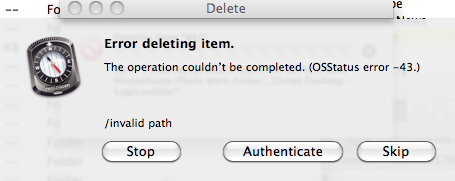
Every time I am working at the office I need to check my path.


If I am not doing one of these three things:

  1. We accept learning as our fundamental purpose.
  2. We will work together to achieve this goal.
  3. We assess effectiveness on the basis of results.

Then my path is invalid and I need to delete that item.

Thursday, 17 January 2013

Why this year is working.

There are so many positive things happening at Westlawn this 2012/2013 year that I wanted to take a second to acknowledge what is happening. I also wanted to try and explain why these things have occurred.

I'll start with a disclaimer: There is the possibility that here at Westlawn there is an unspoken undercurrent of discontent that I am simply not aware of. Now that I am in the office and not in the classroom I do not have access to all of the conversations that are happening behind the scenes. You know those conversations that are negative and critical of school direction. I imagine that there are still some critical and negative conversations taking place in a few corners here at Westlawn, but maybe there aren't. Besides, I have better evidence than teacher satisfaction to prove that something is going right here at Westlawn, Student satisfaction.


Students in Junior High let you know when they are not happy. Over the years here at Westlawn I have heard no shortage of "Westlawn Sucks" and I have seen more than one graffiti tag in the bathroom commenting on Westlawn's propensity for ball licking. Not this year though. I see something different in our students. They are being silly, they are being themselves, they are having small conflicts with their peers and coming up with peaceful solutions. I see students that are happy with their classes, and I hear about students that love their math class or their science class. I see less students isolated and alone, and I see more teachers trying to talk to those students. I see our gym full during sporting events, and I see teachers being listened to and respected when they talk to students. All of the evidence points to a student body that feels safe and cared for and challenged and happy. 


So what is causing this positive shift in student attitude? 
  1. ME - I am! Hey I called this the honest educator didn't I? I have had an immense impact on this school, and I want to do so much more, but at the same time
  2. YOU - Every time you take the time for the student and sacrifice yourself for them you are making a difference.  The individual relationship changes the student. Nothing can replace the impact that the individuals in this building have on the students.

It would be very easy to misunderstand this celebration of individualism, so let's not do that. Individuals still choose to work well in a team. Individuals are the ones that either talk positively or negatively. Individuals put in the extra work to make sure the entire group benefits and that is what is driving this school. Anybody at this school that wants to be great and do great things in their realm can. We have the freedom to put in long hours, to take the time to talk to kids, to care about how students act and behave. There is no edict telling us to behave this way. All of the successes are individual efforts that come from somewhere inside of the individual that decides to care enough. 

We are lucky enough at Westlawn to have enough strong individuals that care about doing the best damn job they can for themselves and for these kids, and you know what the beautiful thing is about the whole thing? It is downright contagious. 

And yes I was talking about you. 


Wednesday, 2 January 2013

New Year's Resolutions

Way more interesting than an update to my professional growth plan, here are my New Year's Resolutions for Westlawn School, complete with indicators of success.


I want to focus on three attainable goals from my professional growth plan. 

1. Continue the whole school student assessment of ability at mid-year (end of January and February). I need to improve upon the test format to try to eliminate error, speed up the tracking and posting of results, and keep a closer eye on the resources post-test. In the office, before the end of January I resolve to have the next stage of testing ready for school-wide implementation. Measure of success: Whole school data available by February 14th.

2. Math Intervention Plan. I have been struggling with this since May of last year. Our students are constantly asking for Math intervention, but there is no effective program in place. The after-school sessions could work, but there aren't any "teachers" in the library, and students do not consistently attend. As well, after school is not enough time to catch and assist our failing students. It is my personal believe that something radically different needs to happen in the math classroom for there to be more success overall,  
but that is not my arena to fight in, so I will stay focused on the intervention plan. Measure of success: by Spring Break, when I have students in my office that identify difficulty in math as a leading cause of behavioural problems and anxiety I will have a clear and concise strategy to help them through this. 

3. FNMI parent involvement. I resolve to improve my ability to collaborate by working closely with Ms. Cardinal in a project designed to invite Aboriginal Parents and Families into the building. Indicator of success: Parents and Families will help organize and implement the Aboriginal day celebration at the end of June. 
Can we get here by June 2013?

Well here we go! What are your resolutions for 2013 at Westlawn or at your school?

Wednesday, 10 October 2012

What to do about Malala?

It is so crucially important that when sharing a story like this one that students feel not depressed but empowered.


This is the time to connect our 11-14 year old students to the world and an issue that should matter to them. They want to connect with this girl and her cause. Teachers please use this moment to let students explore their own ideas of how to connect. 

Start with the story, and then ask the question. What can we do? 

There ought to be time for students to struggle with their own understanding of how to connect with the world at large. All they have been equipped to do is connect with their own teachers and their peers, this they are not ready for.

Don't give them the answers right away. They may have a better idea than what can be provided for them. 

Instead help the students see, feel, and experience their connection with this girl. 

Instead let students ask the questions about our nation, our region, our world and our involvement, potential, real, imagined or otherwise. 

The key here is empathy. Can our young students (especially the girls) connect with Malala and her cause?

Only after students have been given a considerable amount of time to consider what should be done, what can be done should a teacher step in and help them decide on what they can do (and only if the students need our help). 

Here are some ideas to help students connect:
  • write letters to Malala
  • research her cause and her story
  • find out about more about Pakistan and the Taliban.
  • Read her diary - her entire diary
  • send original artwork or video to Malala's family
  • Write letters/video/art to our MP Laurie Hawn, Stephen Harper, or a responsible minister (can you think of a better way to teach students about what a cabinet is than to have them find out who the minister of justice, leader of government, minister of foreign affairs, finance immigration is?)
  • research and connect with the NGO's that are active in the cause and the region
  • write letters to the Pakistani government
  • Extend this event into an understanding of the girl effect 
  • Connect with schools in Pakistan and show them our support.
What will Westlawn do to help empower and connect our students today?